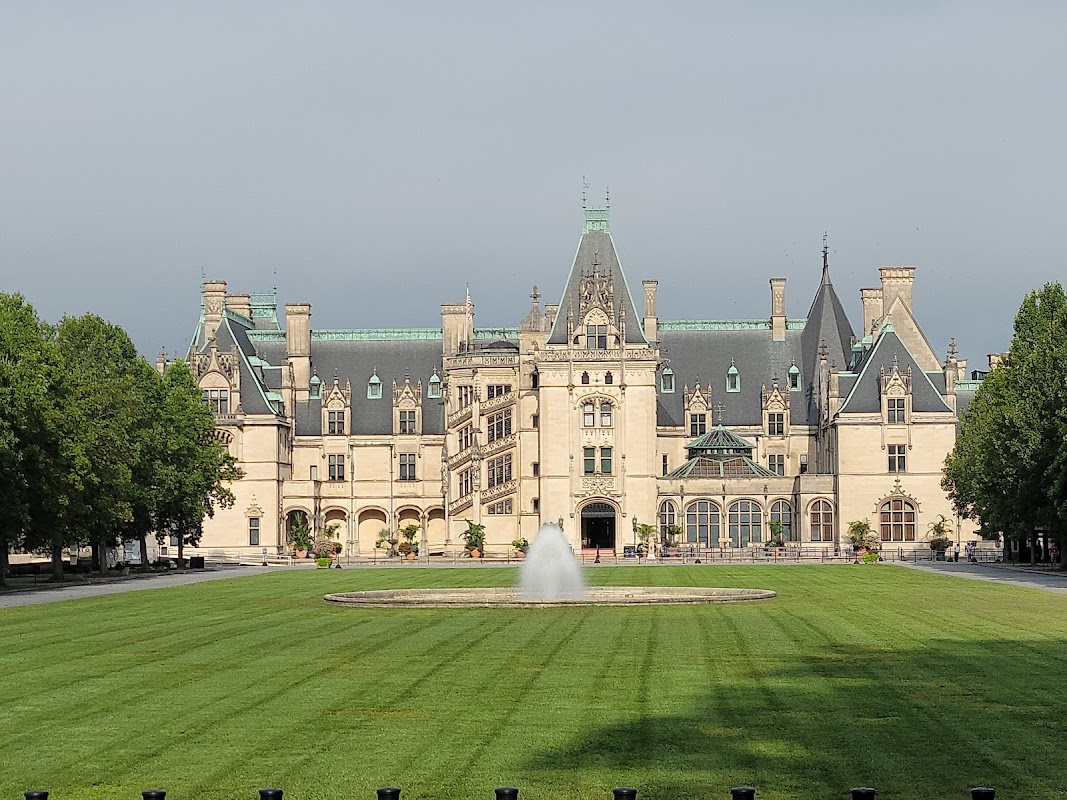
Biltmore Estate
Biltmore is the obvious answer and it is the right one, because the estate is big enough that four generations can do four different things and still eat lunch together. But read its own accessibility pages before you commit a grandparent to it, because the house is the least accessible part of it.
Biltmore's FAQ is blunt: "A visit to Biltmore House includes multiple floors and several flights of stairs. Because of the historic architecture, only the First and Second Floors are accessible," and "guests with limited mobility may ride the elevator between those two floors." For the rest, "Guests who are unable to go to the Third Floor and Basement may visit our Access Lounge and watch a video of the rooms they are unable to access." That is a real limitation, honestly stated, and it is better to know it in the car park than at the foot of a staircase.
The grounds are the better news. Biltmore publishes that accessible parking for Biltmore House sits in Park & Ride Lot E with complimentary accessible shuttle transport, that all estate shuttles are accessible to wheelchair and stroller users, that the Walled Garden and Conservatory are ADA-accessible, and that Antler Hill Village is entirely ADA-accessible. A limited number of wheelchairs are available first-come, first-served for inside tours of the House and the Winery, and the estate encourages you to bring your own. Reduced-price admission tickets for guests with disabilities are issued at the Reception & Ticketing Sales Center rather than online.
For a party of twenty, contact Biltmore Group Sales rather than buying twenty separate tickets and hoping: they publish 828-225-1400 and groupsales@biltmore.com, with call-in hours on weekdays. Ask them directly about the Access Lounge and the accessible shuttle when you book, not on the day.
Biltmore Estate
Photo: Juan Rodriguez