Amsterdam does romance quietly and at short range. There is no grand viewpoint to climb for it and no single street that delivers it. What the city has instead is a few hundred metres of water with seven bridge arches lined up down it, a courtyard behind a door you would walk straight past, a small brown-panelled room where nobody will hurry you, and — if you know where to look — a couple of free rooftops nobody queues for. This is a list of those places, grouped by the kind of hour they suit rather than by day, so you can pull one out when you have an evening rather than a week.
Two things decide whether any of it lands, and neither is on a map. The first is the hour: this is a working city centre, and the same bridge that is a scrum at eight on a Saturday is empty at ten on a Tuesday. Most of what follows is a late-afternoon or after-dark proposition. The second is the light: in December it is dark before half past four, and in June it is still bright at ten — which completely changes when "evening" starts here, and which of these places is worth crossing town for. Both are flagged where they matter.
One piece of local physics that will save your evening: the historic centre is flat, compact and almost entirely walkable, but it belongs to cyclists. The bridges are the safe places to stand still; the red lanes are not. And if you would rather have a full weekend built around these than a list to dip into, there is a three-day Amsterdam plan for couples linked at the bottom of this page.
5 themes10 placesCouples weekendAmsterdam
Planned by Wonder· built from real, checked placesReal places
The Reguliersgracht, the Magere Brug and the Brouwersgracht sit at three corners of the canal belt and are each a fifteen- to twenty-minute walk apart. Doing all three in one evening is a nice walk; doing them in a hurry is pointless. Check sunset before you fix a time — it moves by more than five hours between June and December here.
Go here
Reguliersgracht
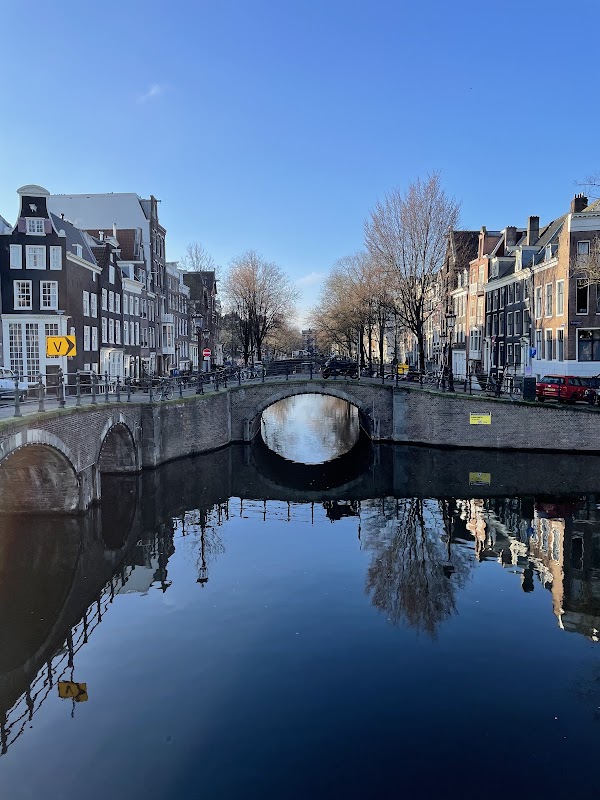
Stand on the Herengracht bridge where it crosses the Reguliersgracht and look south down the smaller canal: the arches of seven consecutive bridges line up one behind the other, and after dark each one is outlined in small lights that complete themselves as circles in the water. It is the most romantic five minutes in Amsterdam, it needs no ticket and no booking, and almost nobody arriving in the city for the first time finds it on their own.
The honest conditions: the reflections only close into circles on a still night, so a windy evening gives you a pretty but ordinary view. The pavement there is narrow and busy with bikes, so stand on the bridge itself rather than at the kerb. And it sits a few minutes' walk from Rembrandtplein, which means it is at its quietest late rather than at the tail of dinner service — go at ten, not at eight.
Reguliersgracht
Photo: WJ NWS
Or here
Magere Brug
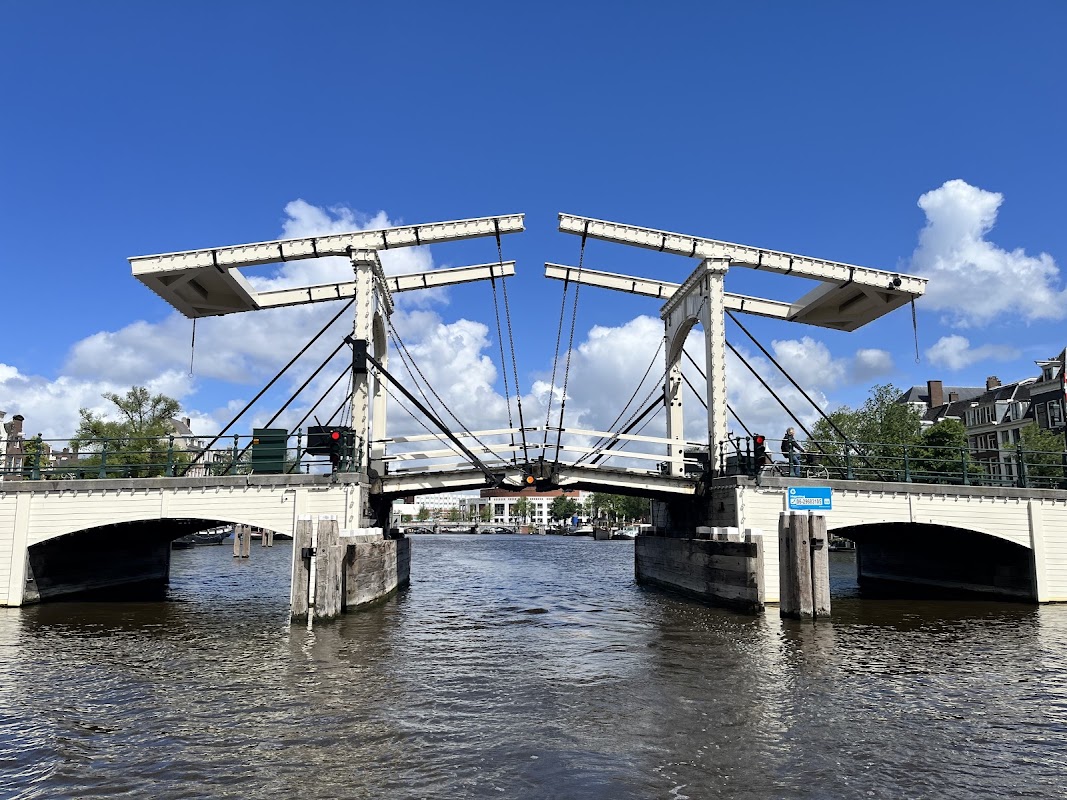
The Magere Brug is the white wooden double drawbridge across the Amstel, and it is the city's other reliable after-dark spot — wider water than the canal belt, a working bridge that still lifts, and the whole frame picked out in small lights once it is dark. Walk the embankment up to it from the Blauwbrug rather than arriving at it directly; the approach along the water is half of what makes it work.
It is more exposed than the Reguliersgracht and the wind comes straight up the river, so this is the one to bring a layer for. In midsummer the light holds so late that the lamps barely register until close to ten; in winter you can have the whole thing lit by five in the afternoon, which is one of the few ways a dark Amsterdam December beats a bright June.
Magere Brug
Photo: Theo A
Eat & rest
The third canal worth crossing town for is the Brouwersgracht, at the northern edge of the canal belt where it meets the Prinsengracht — old warehouse buildings with their shutters and hoisting beams still on them, houseboats, and a run of bridges looking back down into the belt. It photographs better in daylight than the other two and it is a working residential street, so it is quiet in a way the Reguliersgracht never is.
And then there is the obvious one, which is obvious because it is genuinely good: an evening boat through the canal belt. Seen from a metre above the water the gabled houses are lit, the bridges are strung with lights, and the whole city rearranges itself into something slower. Operators run from several docks around the centre; the small open boats with a dozen seats are far better for two than the big glass-roofed ones, and both are worth booking ahead for a departure timed to sunset or just after dark. Boats are open to the weather at both ends — bring the layer you brought for the bridge.
Courtyards
Quiet, a hundred metres off a busy street
A note from Wonder
The Begijnhof is in the middle of the old centre off the Spui; the Hortus is a fifteen-minute walk or a short tram east, near Artis. The Rijksmuseum gardens are on the Museumplein. Amsterdamse Bos is a tram or bus ride to the southern edge of the city — treat it as a half-day.
Go here
Begijnhof
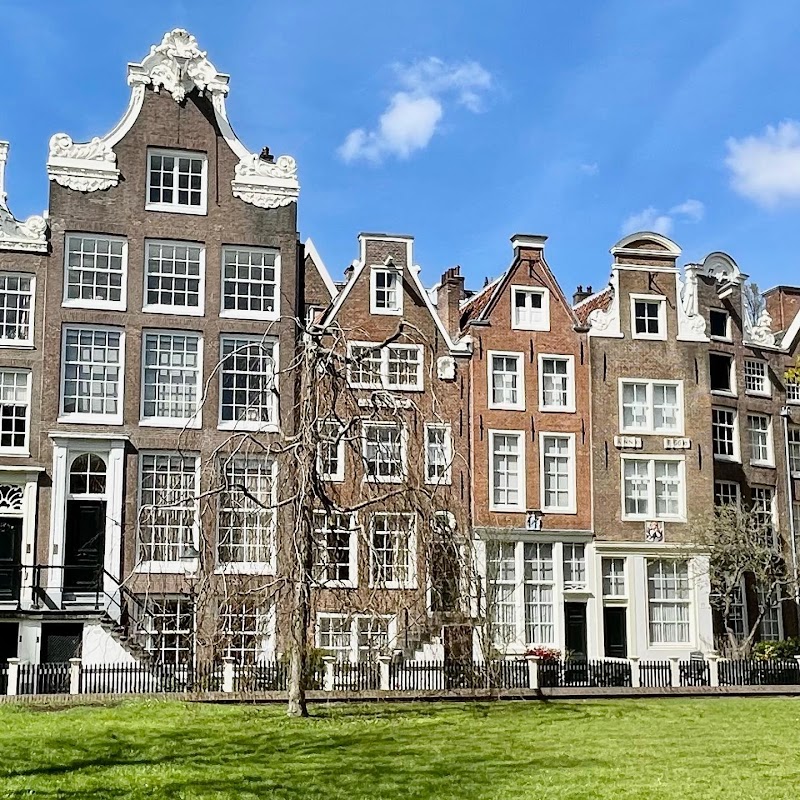
Slip through the plain gate off the Spui and the noise stops as if someone turned it off. The Begijnhof is a medieval courtyard of houses set around a green, including one of the oldest surviving wooden houses in the city, and it is startlingly quiet given that a busy square is ten metres behind you. It costs nothing to walk into and it takes about fifteen minutes to do properly.
The important caveat is not a practical one, it is a manners one: this is privately owned and people actually live in these houses. No bikes, no dogs, no wheeled luggage, and keep your voices down — the quiet is the entire reason to come, and visitors are the only thing that can spoil it. It closes in the evening and on King's Day; check the gate hours before you plan an evening around it, because this is a daylight place.
Begijnhof
Photo: ̶SAAD
Or here
Hortus Botanicus Amsterdam
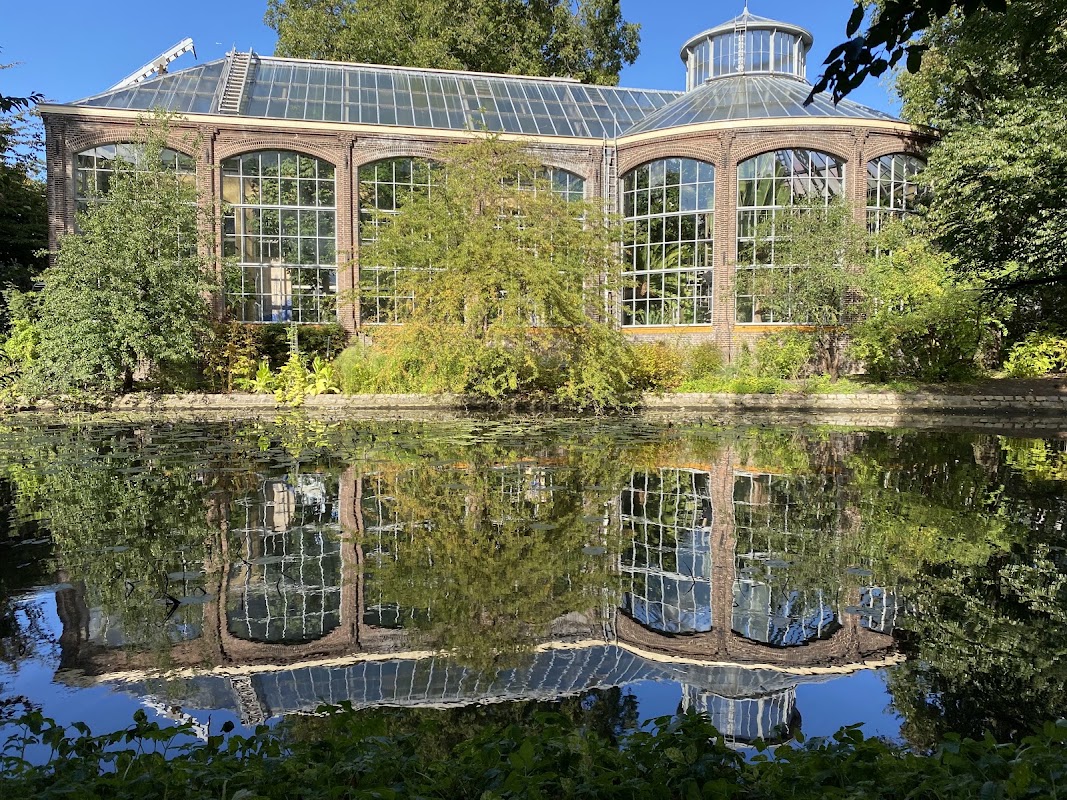
The Hortus Botanicus in the Plantage is one of the oldest botanical gardens in the world, and its two great romantic assets are indoor ones: a butterfly house and a three-climate palm greenhouse, both warm, humid and quietly theatrical on a grey afternoon. Walking into tropical air from a wet Amsterdam street in February is a genuinely disproportionate pleasure.
It is ticketed, unlike almost everything else in this section, and it is small enough that an hour is right rather than three. Check the garden's own site for opening days before you go.
Hortus Botanicus Amsterdam
Photo: Synomaji
Eat & rest
Two more green places that cost nothing. The Rijksmuseum gardens, wrapped around the museum on the Museumplein, are free and need no ticket at all — formal hedging, fountains, salvaged fragments of demolished Dutch buildings set into the planting, and sculpture — which makes them the best-value quiet half-hour in the museum quarter, whether or not you go inside. And south of the centre, the Sarphatipark in De Pijp and the much larger Amstelpark are both ordinary municipal parks in the best sense: local, unbothered, and empty of anyone holding a map.
If you want the version with more space than people, the Amsterdamse Bos on the southern edge of the city is a forest three times the size of Central Park, and you can rent a rowing boat or a canoe on the Grote Vijver there and spend an afternoon on water with nobody watching. It is a proper trip out rather than a stroll — allow the travel time both ways.
Brown cafés
The most romantic room in Amsterdam has no view at all
A note from Wonder
't Smalle, Papeneiland and Winkel 43 are all in or on the edge of the Jordaan and within ten minutes of each other on foot. Hoppe is on the Spui in the old centre, next door to the Begijnhof gate. De Sluyswacht is east, by the Rembrandt House. Glou Glou is south, in De Pijp — pair it with dinner there rather than crossing town for one glass.
Go here
Café 't Smalle
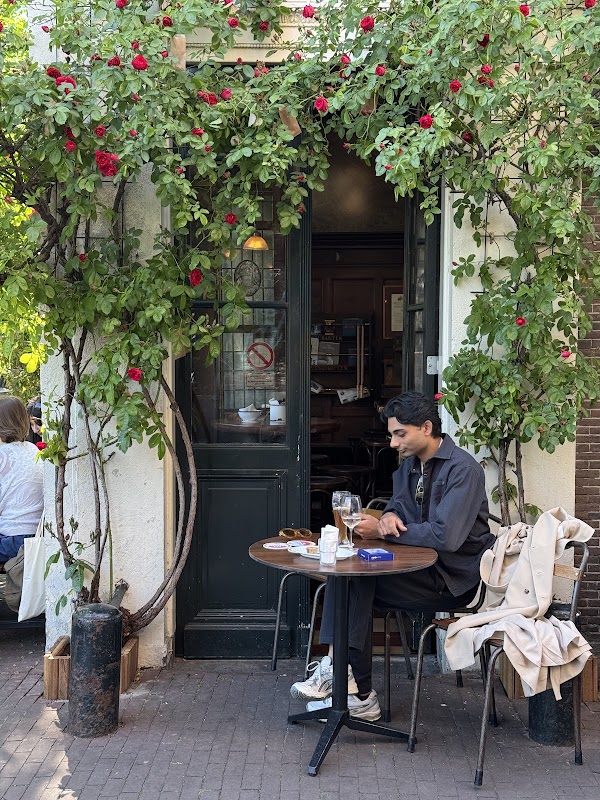
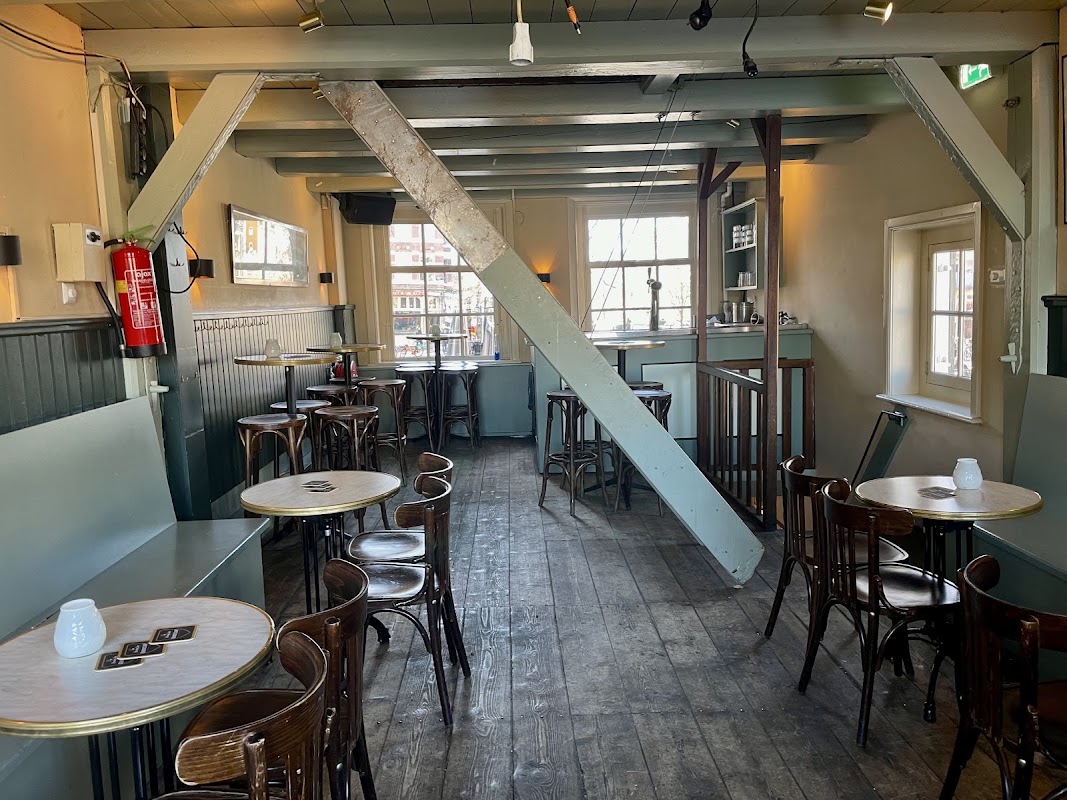
The brown café is Amsterdam's real romantic institution, and it has nothing to do with scenery: dark wood, low light, small tables, no music you have to talk over, and absolutely no interest in turning your table. Café 't Smalle in the Jordaan is the one to start with — a tiny 18th-century interior, and one of the loveliest canal-side terraces in the city on the couple of steps down to the water.
The terrace is the summer version and the interior is the winter one, and both are small, which is the whole point and also the catch: on a warm evening the outside tables are gone by six. Aim for the middle of the afternoon or late, and take the inside table without complaining — that is the better seat anyway when the light goes.
Café 't Smalle
Photo: Stephanie Han
Or here
Café de Sluyswacht
A black timber house from 1692 that has subsided into a visible lean, standing alone on a lock beside the Oude Schans — a national monument that is also just a pub. The terrace looks straight down the water at the Montelbaanstoren, and it is one of the few places in the centre where you are sitting on the canal rather than beside a street that happens to have one.
It is a two-minute walk from the Rembrandt House, which makes it the natural stop after that visit, and it is small and steep inside in the way old Amsterdam buildings are. Check its own site for hours; the terrace is weather-dependent in the obvious way.
Café de Sluyswacht
Photo: Marie HM
Eat & rest
Three more, all real and all long-running. Café Papeneiland sits on the corner where the Prinsengracht meets the Brouwersgracht and has been trading there since the 1600s — the view from the bridge outside is worth the walk on its own. Café Hoppe on the Spui has been in business since 1670 and is the classic standing-room-and-a-beer stop rather than a sitting-down one; go for twenty minutes, not an evening. And Winkel 43 on the Noordermarkt is city-famous for its Dutch apple pie, with a queue on market days to prove it — take a slice to a bench on the canal instead of waiting for a table.
For wine rather than beer, Glou Glou in De Pijp is the small natural-wine bar people actually go back to. One thing to plan around: it does not take reservations, walk-ins only, so it is a place you drift into rather than the anchor of a specific evening.
Canal houses
Inside the houses you have been admiring from the bridge
A note from Wonder
Van Loon (Keizersgracht) and Willet-Holthuysen (Herengracht) are about ten minutes apart on foot in the southern canal belt; Het Grachtenhuis is between them. The Rembrandt House is further east, by de Sluyswacht. The Noord ferries are free, need no ticket and run around the clock from the back of Centraal.
Go here
Museum Van Loon
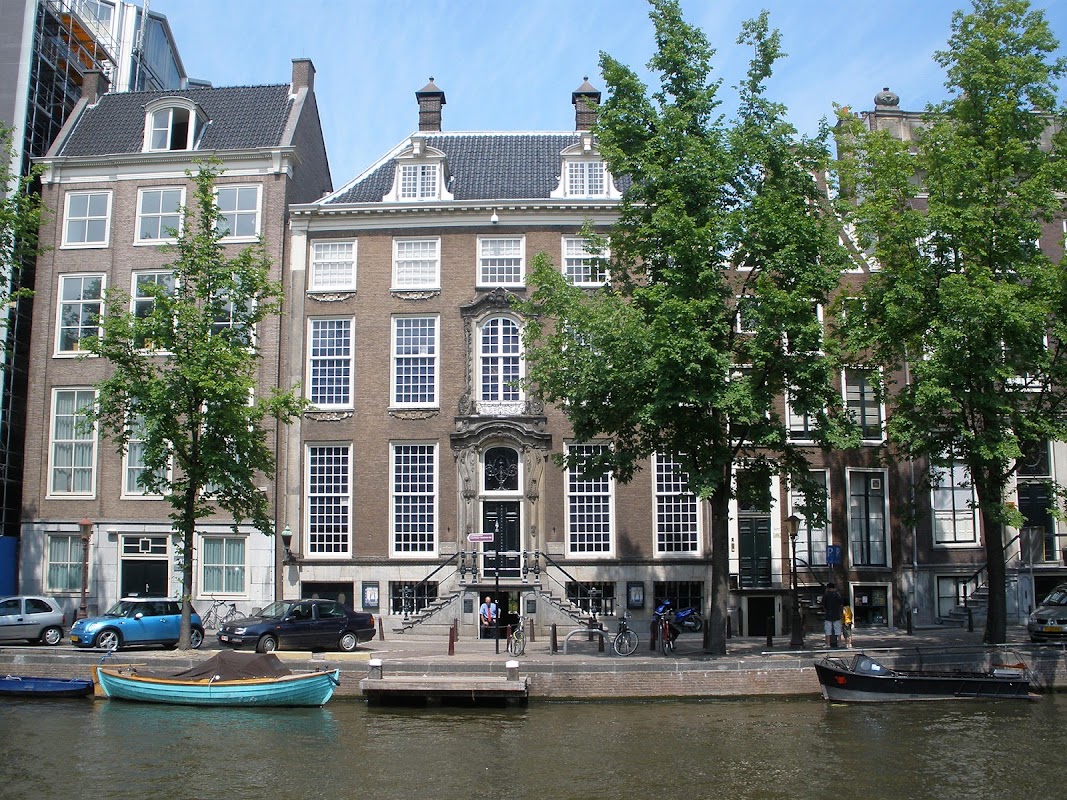
This is the answer to the question every couple asks on the second day here — what are these houses like inside? Museum Van Loon on the Keizersgracht is a preserved patrician canal house: family portraits, period rooms, the staircase, and, at the back, a formal garden with a coach house closing it off that almost nobody expects to find behind a canal facade.
It is a small, unhurried hour rather than a museum morning, which is exactly the right size when the point of the day is each other. The garden is the part people remember; go through the house at your own pace and then sit in it.
Museum Van Loon
Photo: Museum Van Loon
Or here
Museum Willet-Holthuysen
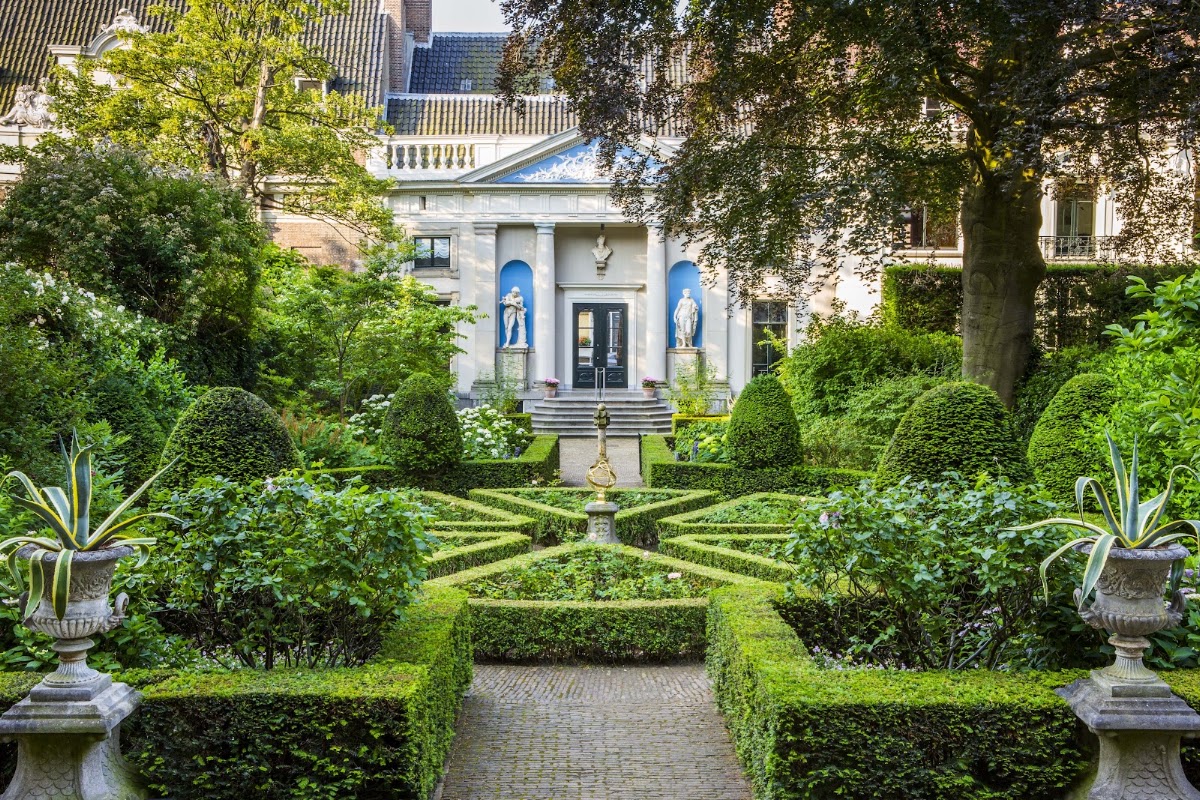
The same idea a few canals over and, if anything, prettier at the back: a Herengracht house kept as its last owners left it, with a restored French-style formal garden behind it laid out in box hedging and gravel. It is the garden that makes this one worth the ticket, and it is invisible from the street — which is the recurring theme of romantic Amsterdam.
It is closed one day a week, so check before you build an afternoon around it.
Museum Willet-Holthuysen
Photo: Huis Willet-Holthuysen
Eat & rest
Two more indoor rooms for a wet afternoon. The Rembrandt House Museum on the Jodenbreestraat is the house where Rembrandt lived and worked, reconstructed with his studio and his printing press — more absorbing than it sounds, and the closest thing the city has to standing inside a seventeenth-century working life. And Het Grachtenhuis, the Museum of the Canals on the Herengracht, explains how the canal belt was actually built and financed, which is a strange thing to find romantic and yet reframes every bridge you stand on afterwards.
If you would rather cross the water than go indoors, the Eye Filmmuseum sits on the northern bank in Amsterdam-Noord, reached by a free passenger ferry that runs day and night from behind Centraal Station and takes about five minutes. The crossing at dusk, standing at the rail with the IJ black on both sides, is genuinely one of the best free things two people can do in this city — and the building's café looks straight back at the water.
Views
Two free roofs, and one you pay for
A note from Wonder
NEMO and the OBA library are both on the Oosterdok, a ten-minute walk east of Centraal and two minutes from each other — do them as a pair. A'DAM Lookout and Pllek are both across the IJ in Noord, on two different free ferries from behind Centraal. Sunset is the whole point of all four, so check the time before you set out.
Go here
NEMO Science Museum
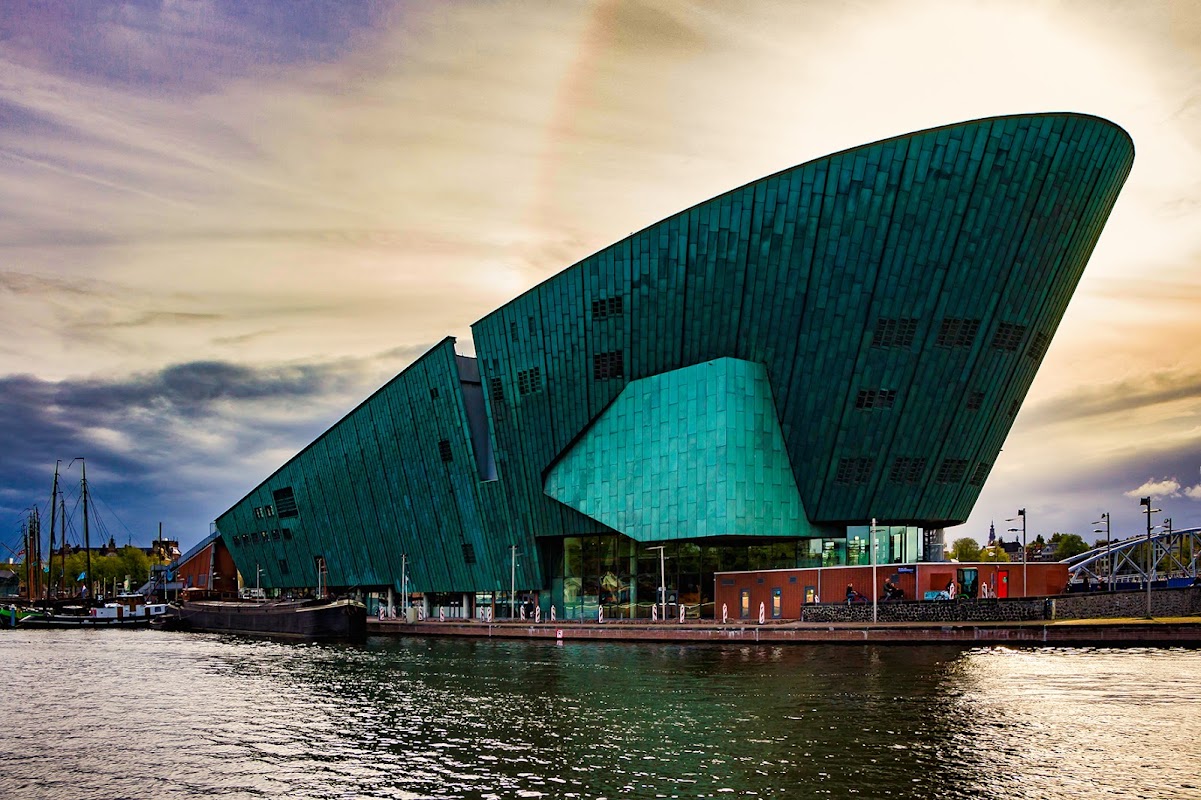
The green copper hull of NEMO rises out of the Oosterdok like a ship, and its whole sloping roof is a public terrace reached by an outside staircase — free, no ticket, and nothing to do with visiting the science museum underneath it. From the top you get the old centre, the harbour, the church towers and the water, all at once, from what is effectively a hillside in a city that has none.
It is the single most under-used romantic spot in central Amsterdam. Two caveats: the terrace keeps its own hours and closes well before the museum's neighbours do, so it is an afternoon-and-early-evening place rather than a late one — check NEMO's site for the day you want. And it is completely exposed, which is wonderful in June and brisk in February.
NEMO Science Museum
Photo: Ralph Beetz
Or here
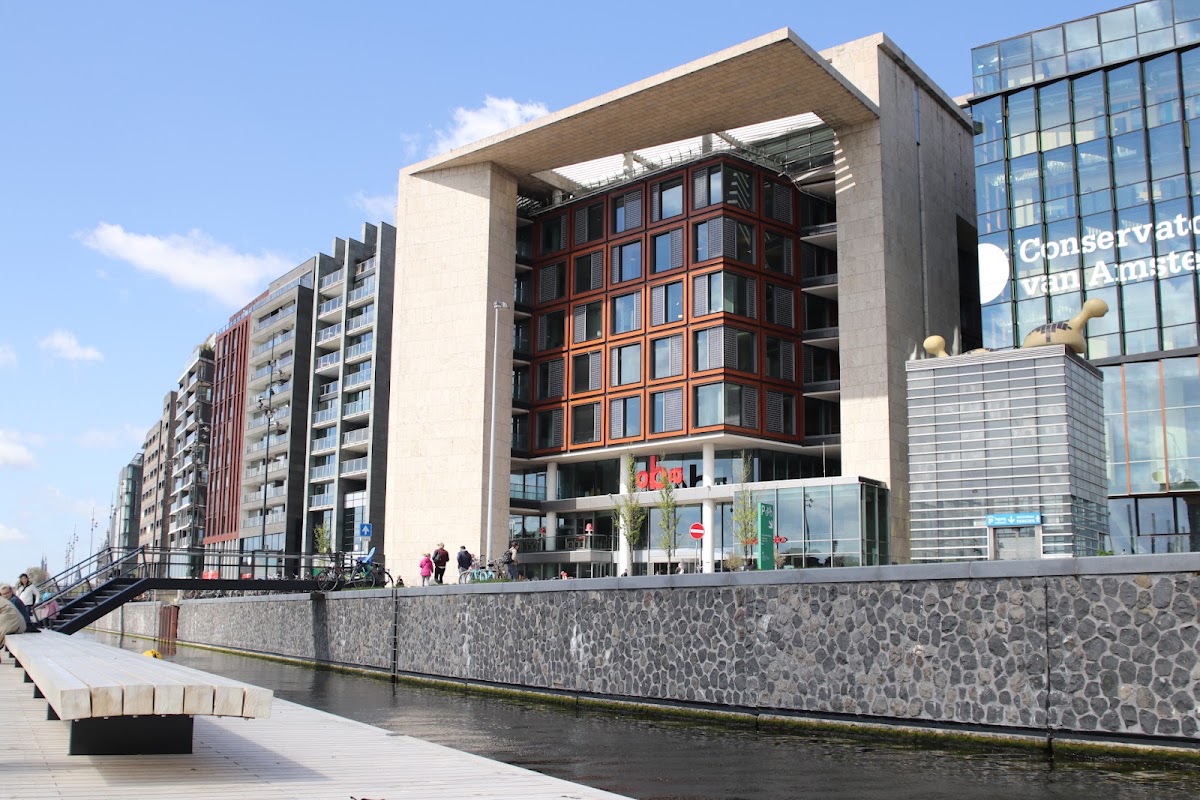
OBA Oosterdok
The public library on the Oosterdokskade — a two-minute walk from NEMO — has a café on its top floor with a terrace that looks out over the same water and rooftops, and it is also free to walk into. Nobody checks whether you are a member, and it is the warm version of the NEMO roof when the wind is up.
Honest seasonality: the outdoor terrace is closed through the winter months and depends on the weather even in season, so from roughly November to March treat this as an indoor view through glass rather than a terrace. That is still a good hour with a coffee, but it is not the same thing.
OBA Oosterdok
Photo: OBA Oosterdok
Eat & rest
The paid version is A'DAM Lookout, on top of the tower across the IJ in Noord — a ticketed observation deck with an outdoor top level, reached by the same free ferry as the Eye. It is genuinely the best view of the city and it is also the busiest; book a slot rather than queueing, and go for the last light rather than the middle of the day.
Further west along the northern bank, Pllek on the NDSM wharf is an old shipping-container building on an artificial beach facing back across the water at the city — sofas, a fire, sand, and a completely different Amsterdam from the canal belt. It is a ferry ride and then a short walk, it is at its best in the long evenings, and it is the one place on this page where the right move is to arrive with no plan at all.
Seasonal honesty — the light decides everything here
More of this list depends on the calendar than on the weather. What actually changes between a December visit and a June one:
Daylight swings by more than five hours. In late December it is dark before half past four; in June it is still light at ten. Everything on the "Canals" and "Views" sections above is a different plan in each case — in winter you can have a lit bridge at teatime, in summer you are out at ten or you are not doing it at all.
The OBA library roof terrace is closed through the winter months and is weather-dependent even in season — from roughly November to March, plan it as a view through glass.
The NEMO roof and the canal bridges are entirely exposed. Wind, not rain, is what ruins them: the seven-bridge reflection only closes into circles on a still night.
Terraces — 't Smalle on the water, de Sluyswacht on the lock, Pllek on the sand — are a spring-to-autumn proposition. The interiors are the winter version of the same places, and in the brown cafés the interior was always the better seat.
April through early June and September are the sweet spot: long light, mild evenings, and terraces genuinely worth sitting on. Rain is possible in any month, which is why every section above has something with a roof in it.
What does not change: the Begijnhof, the Rijksmuseum gardens, the canal houses, the Noord ferries and the brown cafés are all there year-round.
Where to eat and drink (real places, clustered)
Canal-side afternoon, Jordaan: Café 't Smalle (Egelantiersgracht) — steps down to the water outside, a tiny 18th-century room inside.
Brown café with the best corner in the city: Café Papeneiland (Prinsengracht at the Brouwersgracht) — trading since the 1600s.
Old-centre standing stop: Café Hoppe (Spui) — in business since 1670, next to the Begijnhof gate; twenty minutes, not an evening.
On the water, east: Café de Sluyswacht (Jodenbreestraat) — a leaning 1692 lock-keeper’s house with a terrace facing the Montelbaanstoren.
Dutch apple pie: Winkel 43 (Noordermarkt, Jordaan) — city-famous; expect a queue on market days and take it to a bench.
Natural wine, De Pijp: Glou Glou — small, good, and walk-ins only, so drift in rather than building an evening on it.
The one to book: Restaurant De Kas (Frankendael) — a restaurant inside a 1926 municipal greenhouse with its own kitchen garden, holding both a Michelin star and a Green Star. Reserve well ahead, and note the garden terrace depends on the weather.
Across the water, no plan required: Pllek (NDSM wharf) — containers, a fire and an artificial beach facing the city; free ferry from behind Centraal.
Dinner neighbourhoods: De Pijp around the Albert Cuyp Market for density, the Haarlemmerstraat and Haarlemmerdijk north of the Jordaan for elbow room. Good small kitchens here book out Thursday to Saturday — reserve the one dinner you care about before you fly.
Four romantic places that are not what you think, or not there at all
Amsterdam guides recycle each other, and four fixtures of that genre will waste an afternoon in 2026. Checked, and honestly reported:
The Westerkerk tower climb: not available. The church says the tower cannot be climbed while restoration work runs "in the coming years". The Westerkerk itself, and the view of it from the Prinsengracht bridges, is as good as ever — but do not go there for the view from the top.
The "I amsterdam" letters at the Museumplein: gone since 2018, removed by the city over crowding. A travelling version turns up elsewhere from time to time, but there is nothing to photograph on the Museumplein.
The Bloemenmarkt, the "floating flower market" on the Singel: still there, but be realistic — it is down to around fifteen stalls selling mostly bulbs and souvenirs rather than the lush cut-flower market the postcards show. Walk it in passing; do not cross town for it.
The Tassenmuseum Hendrikje (the bag museum, a canal-house favourite): permanently closed since 2020. The collection survives privately; the museum does not.
One that is worth the crowd anyway: the Anne Frank House on the Prinsengracht. It is not romantic and this page does not pretend otherwise — but it is the most important building on this list, tickets are timed and released online in advance, and that is a decision to make before you travel rather than on the day.
Your trip, your crew
Make this Amsterdam plan yours
Tell WonderKit your dates and who's coming, and we'll rebuild this around your group in about a minute — everyone votes on the plan, and costs split automatically. One subscription, the whole group.