Dublin is a small capital that rewards couples who slow down. The whole historic core — Trinity, the Georgian squares, the Liberties, Smithfield — fits inside a walkable ring, which means the romance here isn't in ticking off sights, it's in the hours between them: a long lunch, a snug in a pub where nobody is hurrying you, a cliff path over the Irish Sea that you can reach on a suburban train. This plan gives you one anchor a day, a backup for when the weather turns, and evenings built around music and food rather than a schedule.
Two honest notes before you book. First, the weather: Dublin gets rain on most days of the year, usually as short showers rather than an all-day soaking, so bring a proper jacket and treat every outdoor plan as swappable — that's why each day below has an indoor backup. Second, the daylight: in December the sun is down before half four, and in June it barely sets before ten. That single fact reshapes a weekend here more than anything else, so we've flagged which parts of the plan shift with the season.
One more thing worth saying plainly: Temple Bar is where visitors are sent and where pints cost the most. The trad sessions and the pubs locals actually sit in are a few streets away in every direction, and this plan points you at those instead.
3-day plan6 stopsCouples weekendDublin
Planned by Wonder· built from real, checked placesReal places
Everything on this day is within a twenty-minute walk of Trinity’s front gate. Book the Book of Kells slot online in advance and aim for the first or last hour of the day — the middle of the afternoon is the crush.
Anchor
Trinity College Dublin
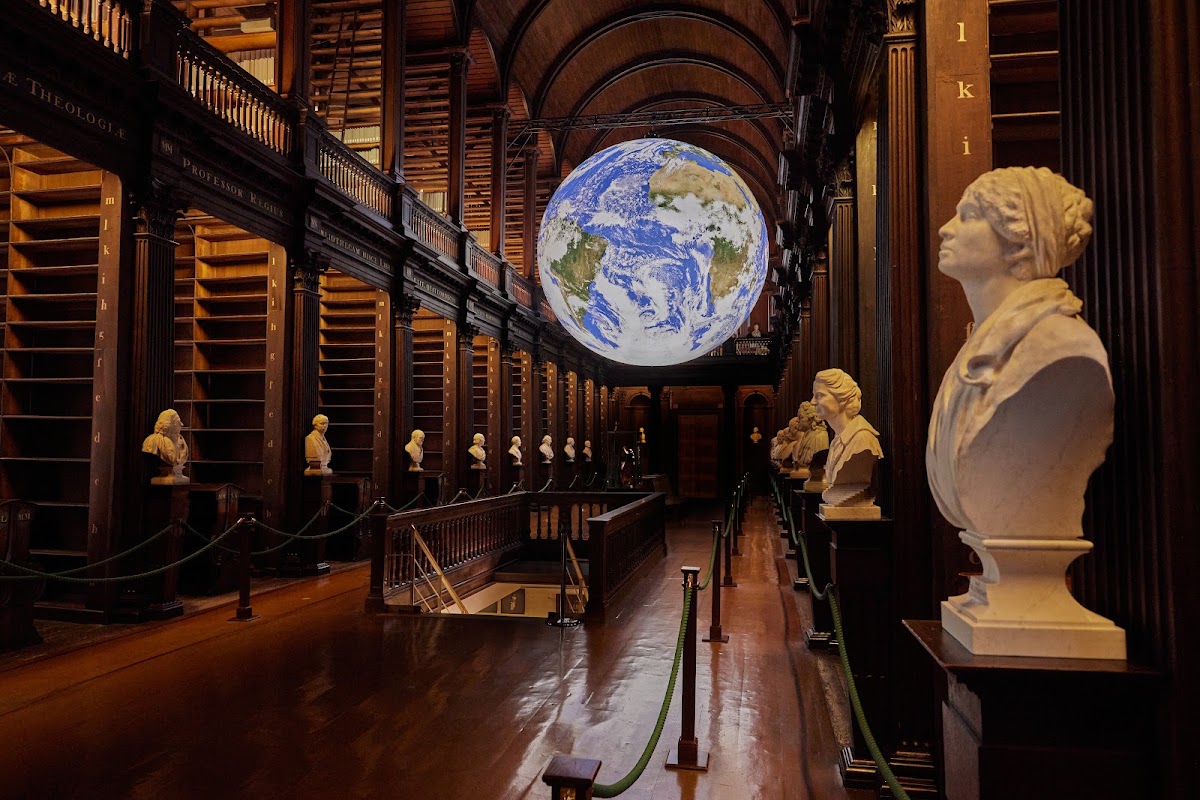
Trinity College sits right in the middle of the city, a walled campus of cobbles and cricket grass that you step into off a busy street, and the Old Library at its heart holds the Book of Kells — a ninth-century illuminated gospel book, still on display in its case — and above it the Long Room, a barrel-vaulted 18th-century chamber that is genuinely breathtaking to walk into together.
An honest caveat that matters for what you'll actually see: the Old Library is midway through a major conservation programme, and most of the Long Room's 200,000 books have been moved into storage while it runs — around 20,000 remain in the first bays. Trinity's own framing is fair — the shelves haven't been seen empty in centuries, and the room is often used for a large temporary installation while the work runs. It is still a remarkable space; it is not the wall-of-books photograph you may have in your head. Trinity says the Old Library and Long Room stay open to visitors until the end of 2027, when the main construction phase begins. Book a timed slot online rather than queueing.
Trinity College Dublin
Photo: The Book of Kells Experience
Backup
National Gallery of Ireland
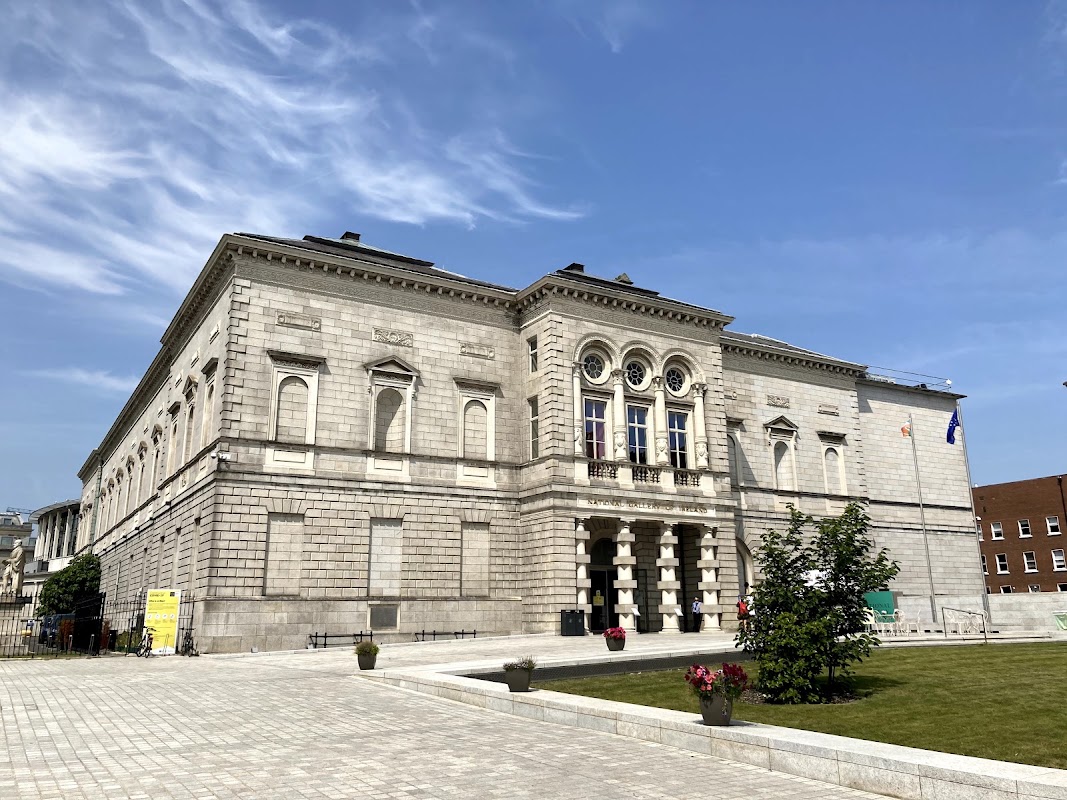
If the queue or the ticket price isn't for you — or if the rain has properly set in — the National Gallery of Ireland is a two-minute walk away on Merrion Square, free to enter for the permanent collection, and quiet enough on a wet afternoon to wander at your own pace with a coffee at the end. It's the easiest romantic swap in the city.
National Gallery of Ireland
Photo: Kinsun Tsang
Eat & rest
Between the two: walk the Georgian squares. Merrion Square and St Stephen's Green are both a few minutes from Trinity, ringed by the tall brick houses and painted doors that give Dublin its look, and the Green in particular is a good place to sit and do nothing for half an hour. If you want the version almost no visitor finds, slip into the Iveagh Gardens behind the Green — a walled Victorian garden with a cascade and a maze, reached through easy-to-miss entrances, and reliably emptier than everywhere else within ten minutes' walk.
Eat / rest: Dinner at Etto on Merrion Row — a small, much-loved Italian-leaning wine bar and restaurant that has been one of the city's best mid-priced tables for years. It's tiny and books out, so reserve well ahead — their booking window opens roughly two months in advance, and note they're closed on Sundays and bank holidays. Then walk about thirty seconds up the same street to O'Donoghue's, the Merrion Row pub the Dubliners made their own in the 1960s, which still runs trad and folk sessions nightly with no cover charge — musicians in the corner, everyone else packed around them.
If you'd rather the purist version of the same evening, cross the river to The Cobblestone in Smithfield instead. It's a working session pub in a market square, sessions run daily, and the etiquette is simple: the music is the point, so talk quietly while it's playing.
Day 2
A cliff walk over the Irish Sea, then seafood
A note from Wonder
The DART runs from Connolly, Tara Street and Pearse stations in the centre; Howth is the terminus of the northern branch, Dalkey and Killiney are on the southern one. A Leap Card is cheaper than paying cash and works on the DART, buses and Luas trams.
Anchor
Howth Cliff Walk
This is the day that makes a Dublin weekend feel like a proper trip. Howth is a working fishing village on a headland at the end of the northern DART line — about twenty-five minutes on a suburban train from the city centre — and the Cliff Path Loop starts a short walk from the station, climbing out of the village and onto clifftops with the whole of Dublin Bay on one side and the Irish Sea on the other. There are several waymarked colour-coded routes of different lengths, so you can pick a shortish loop of an hour or two or commit to a longer one; the shorter green and blue routes are the ones most couples take.
Go slowly, stop often, and don't try to make it a workout. Wear shoes with grip — the path is rough and genuinely muddy in parts after rain, which is most of the year — and check the wind before you go, because the exposed sections are no fun in a gale.
Howth Cliff Walk
Backup
Dalkey
If the north side looks blown out or you just want something gentler, take the DART south instead to Dalkey — a pretty seaside village with a castle in the middle of it — and walk up Killiney Hill for the view down over the bay that Dubliners like to compare to the Bay of Naples. It's a shorter, easier climb than Howth's loop, with more cafés at the bottom of it.
Dalkey
Photo: Carrot
Eat & rest
Eat / rest: Howth's harbour is where you eat lunch on this day — the village has a long-standing cluster of seafood restaurants and fish shops along the West Pier — Beshoffs and The Oar House are the two you'll be pointed at — and buying chowder or fish and chips and eating them looking at the boats is a perfectly good version of the plan. There's also a food market by the harbour on Saturdays and Sundays. Come back into town in the late afternoon.
For the evening, Bar 1661 on Green Street builds its whole list around Irish spirits and poitín in particular, and has collected serious awards for it since opening in 2019 — it's the best cocktail bar in the city to sit at as a two. The Vintage Cocktail Club, tucked behind an unmarked door in Temple Bar's quieter lanes, is the other move: you ring the bell to get in, the rooms are small and low-lit, and it's the rare Temple Bar address worth the walk. Both take bookings and both fill up on weekends.
Day 3
Kilmainham, the Liberties, and the highest view in the city
A note from Wonder
Kilmainham and the Guinness Storehouse are both west of the centre and about twenty minutes apart on foot, or a few minutes by bus or the Luas red line. Doing them on the same day is the efficient move; doing them in the same afternoon is a lot, so give the Gaol the morning.
Anchor
Kilmainham Gaol
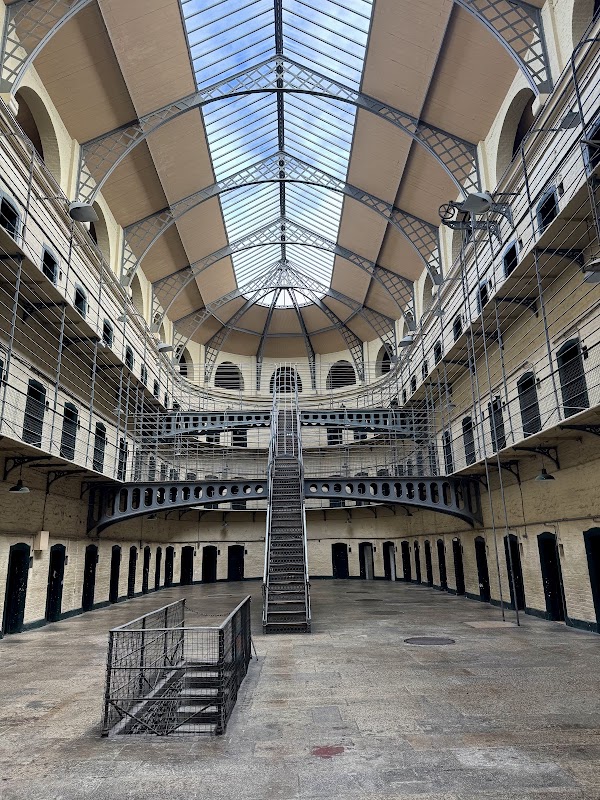
Not romantic in the candlelit sense — but this is the visit couples talk about on the flight home. Kilmainham Gaol is a decommissioned prison on the western edge of the city where most of the leaders of the 1916 Rising were held and executed, and it's seen only on a guided tour, which is why it lands: an hour walking the wings and the stonebreakers' yard with someone who can tell you what happened in each of them. The great east wing, with its tiers of cells under a glass roof, is the image you'll recognise.
The booking is the hard part, so treat this as the thing you plan the weekend around. Tickets are released online 28 days ahead at midnight Irish time and slots go within minutes; if you miss them, a few same-day tickets and cancellations appear on the site in the morning. Book only through the official museum site — no third party is authorised to sell them, and other sites' tickets aren't valid at the door.
Kilmainham Gaol
Photo: Alina E
Backup
Irish Museum of Modern Art
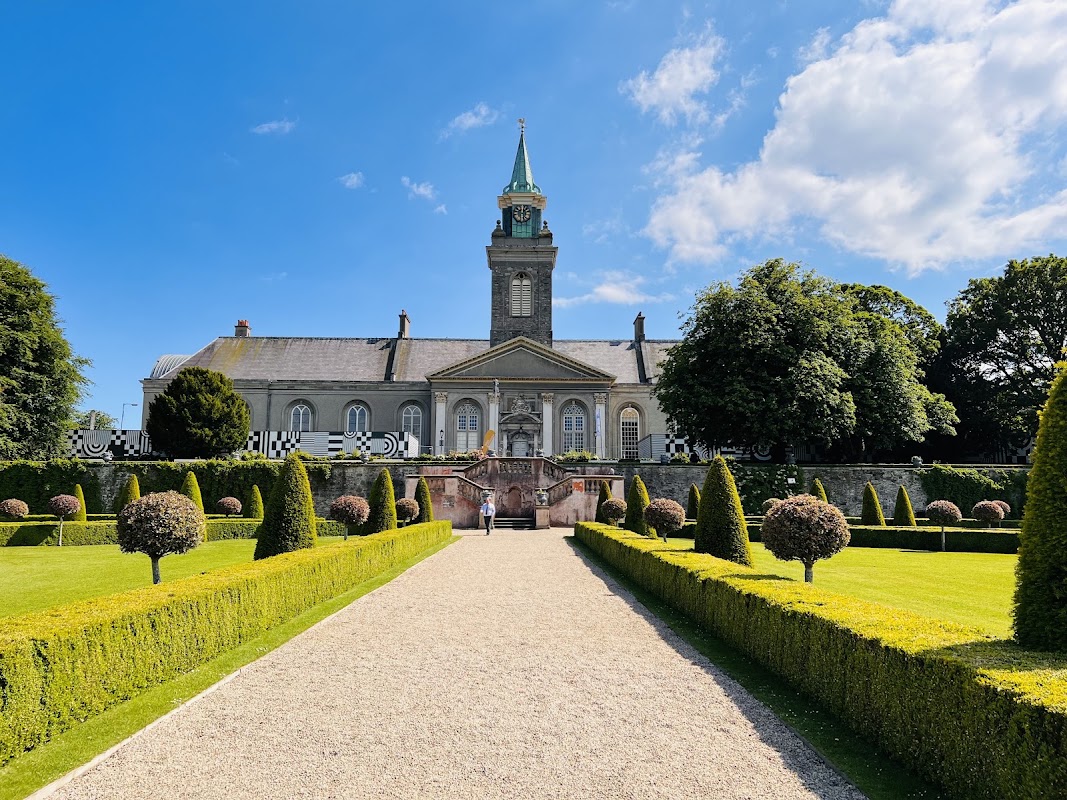
If you can't get a Gaol slot, the Irish Museum of Modern Art is a five-minute walk away in the Royal Hospital Kilmainham, a grand 17th-century building with formal gardens and a long courtyard. Entry to the main collection is free, the galleries are calm, and the grounds are a good place to walk off a late breakfast whatever the sky is doing. It's closed on Mondays, and while the galleries and grounds are open as normal, the building's Great Hall and Chapel are shut for 2026 — see the note on state closures below.
Irish Museum of Modern Art
Photo: Fabian Valle
Eat & rest
Sunset moment: The Gravity Bar at the top of the Guinness Storehouse in the Liberties is a glass-walled circular room 46 metres up, and it is the highest publicly accessible view in central Dublin — a pint (or a Guinness 0.0) is included in the ticket, and you get the city, the mountains behind it and the docks laid out in a full circle. Seasonal honesty: in winter, when the sun is down by half four, this genuinely is a sunset room. In June the sun doesn't set until close to ten, long after the Storehouse has shut — so in summer treat it as an afternoon view, not a sunset one, and go earlier in the day when it's also less crowded. Booking a timed slot isn't required, but it's the most-visited paid attraction in the country and walk-ups queue, so do it anyway — and note it shuts in the early evening, not late.
Eat / rest: Make this the night you book properly. Chapter One, on Parnell Square in a Georgian basement, holds two Michelin stars and is the great special-occasion table in Ireland; the dining room is small, so book two to three weeks ahead at minimum — and check the day, because it's closed Sundays and Mondays. If that's not the trip you're on, spend the evening in the Liberties instead — the neighbourhood around the Storehouse has old pubs, distillery tap rooms and casual kitchens, and it's a far better last night than another lap of Temple Bar.
When it rains (which it will)
Dublin gets showers on most days of the year, and in winter the light is gone by mid-afternoon. Keep these in your back pocket — all indoors, all central:
National Gallery of Ireland (Merrion Square) — free permanent collection, and the easiest place in the city to lose a wet hour together.
National Museum of Ireland — Archaeology (Kildare Street) — free, and home to the bog bodies and the Iron Age gold; genuinely strange and memorable.
Irish Museum of Modern Art (Kilmainham) — free main collection in a 17th-century hospital building, with covered courtyards to shelter in.
A long lunch in a pub with a snug — the small wood-panelled booths built for private conversation are a real Dublin institution, and sitting in one for two hours while it hammers down outside is not a consolation prize.
The Book of Kells and Kilmainham Gaol both use timed entry, so a wet day is only a rescue plan if you booked ahead — check both before you leave the hotel.
Two things you were probably expecting, and why they aren’t here
Ireland holds the presidency of the Council of the EU through the second half of 2026, and the state has closed part of its heritage estate to host it. Two of Dublin’s standard itinerary entries are affected:
Dublin Castle — the State Apartments, the Chapel Royal and the medieval undercroft are closed to visitors until the end of 2026, with the campus itself shut since mid-June. Only the courtyards are open, and the interiors are due back in January 2027. That is why the castle is not a day on this plan.
The Chester Beatty Library — normally one of the best free museums in the city, and one of the great wet-afternoon options — is closed on the same grounds until the end of 2026.
IMMA at the Royal Hospital Kilmainham is only partly affected: the Great Hall and Chapel are closed for 2026, but the galleries and grounds stay open and free, which is why it is still the Day 3 backup.
If you are reading this in 2027 or later, check each one’s own site — all three are due to come back, and this plan gets better when they do.
Where to eat and drink (real places, clustered)
Special occasion, Parnell Square: Chapter One — two Michelin stars; book two to three weeks out, more for a weekend. Closed Sundays and Mondays.
Mid-priced and excellent, Merrion Row: Etto — small Italian-leaning wine bar and restaurant, reserve well ahead. Closed Sundays.
Trad session, Merrion Row: O’Donoghue’s — nightly trad and folk, no cover, thirty seconds from Etto’s door.
Trad session, Smithfield: The Cobblestone — a working session pub; the music is the point, so keep the talking low.
Cocktails, Green Street: Bar 1661 — Irish spirits and poitín, award-winning since 2019, bookable.
Cocktails, Temple Bar: Vintage Cocktail Club — ring the bell at the unmarked door; small vintage rooms, worth reserving.
Lunch by the water, Howth: the West Pier seafood restaurants and fish shops — Beshoffs, The Oar House — plus a Saturday–Sunday market by the harbour.
The view: Gravity Bar, Guinness Storehouse — timed tickets, pint included, best earlier in the day in summer.
Seasonal honesty
A Dublin weekend changes shape more with the calendar than most European city breaks. What actually differs:
December daylight runs roughly half eight in the morning to half four in the afternoon. Plan the cliff walk for the middle of the day or move it to a different season — and lean into the fact that the city is at its best after dark in winter, lit up and full.
June daylight runs until close to ten at night, which is wonderful for the coast and useless for a Gravity Bar sunset. Swap the order: coast in the long evening, indoor sights in the middle of the day.
The Howth and Killiney paths are exposed. Check the wind forecast, not just the rain one — a wet day up there is fine, a gale is not.
Rain here mostly comes as showers rather than a solid downpour, so the local habit is to keep walking and duck into somewhere for twenty minutes rather than cancel the day. Pack a jacket with a hood and skip the umbrella; the wind will win.
Nothing on this plan closes for the season, but the timed-entry sights (Book of Kells, Kilmainham Gaol, Guinness Storehouse) run on their own booking windows — check each before you build a day around it.
Your trip, your crew
Make this Dublin plan yours
Tell WonderKit your dates and who's coming, and we'll rebuild this around your group in about a minute — everyone votes on the plan, and costs split automatically. One subscription, the whole group.