San Francisco keeps its best weather secret badly. Mid-February here is mild — light-jacket mild — and because the summer fog is months away, the clear days in winter are the sharpest of the entire year: you can stand at the water and see every cable on the Golden Gate Bridge, and the view from any hill goes forty miles. The city is also green in February in a way it is not in August, and the botanical garden in Golden Gate Park has magnolias in full bloom while most of the country is under snow.
The catch is that February is the middle of the rainy season. It does not drizzle here so much as arrive: a front comes through, it rains hard for half a day, and then the sky opens into something spectacular. So the honest way to plan a romantic weekend in San Francisco in February is to hold the outdoor anchors loosely, keep an indoor swap ready for each one, and be willing to reorder the days around the forecast the night before. Every day below is built that way.
Two more local truths. The hills are real, and so is the wind at the water's edge — the temperature is mild but standing still at Crissy Field in a t-shirt is a rookie error. And the neighbourhoods are the point: each of these days is one part of town done slowly, with a short ride between them, rather than a checklist strung across the whole city.
3-day plan6 stopsCouples weekendSan Francisco
Planned by Wonder· built from real, checked placesReal places
Golden Gate Park is enormous — it runs three miles to the ocean — so pick the eastern half and stay in it; the botanical garden, the Japanese Tea Garden, the de Young and the Conservatory are all within fifteen minutes of one another on foot. Both gardens charge admission and both are ticketed online. February mornings can start grey and clear by noon, so if the forecast is mixed, do the glasshouse first and the open garden after lunch.
Anchor
San Francisco Botanical Garden
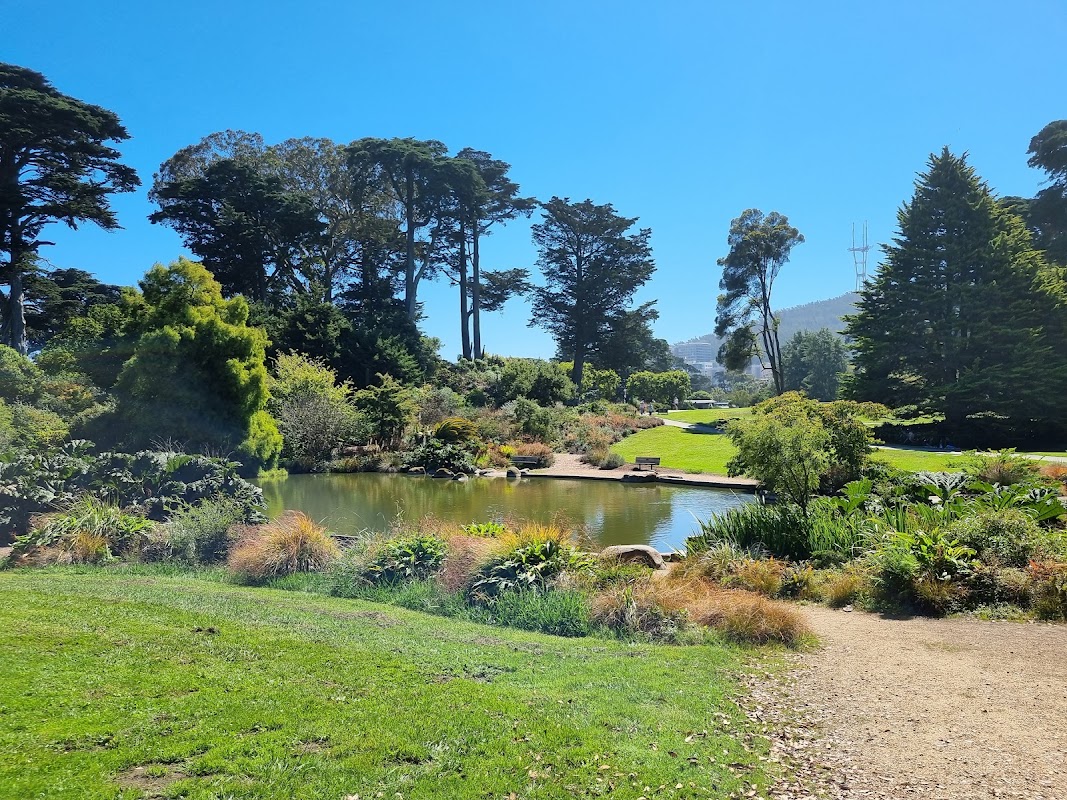
Start with the thing that makes a February trip here better than a July one. The San Francisco Botanical Garden, in the middle of Golden Gate Park, holds a magnolia collection that is one of the most significant outside China — and it flowers in the depths of winter, so a mid-February morning finds enormous pale blossoms opening on bare branches over the lawns. The garden's mild-climate collections mean there is something green in every direction even in the wettest month, and it is big enough to lose an hour in without a plan.
A few minutes' walk north, the Japanese Tea Garden is the oldest public Japanese garden in the United States, laid out for the 1894 midwinter exposition and kept ever since: a drum bridge, a pagoda, koi ponds, clipped pines, and a tea house where you can sit with a pot of tea and a plate of small sweets while it drizzles on the roof. It is small, deliberately slow, and the single most romantic half-hour in the park. Go early — it is compact, and it feels quite different with twenty people in it than with two hundred.
San Francisco Botanical Garden
Photo: Ashley Naroznik
Backup
Conservatory of Flowers
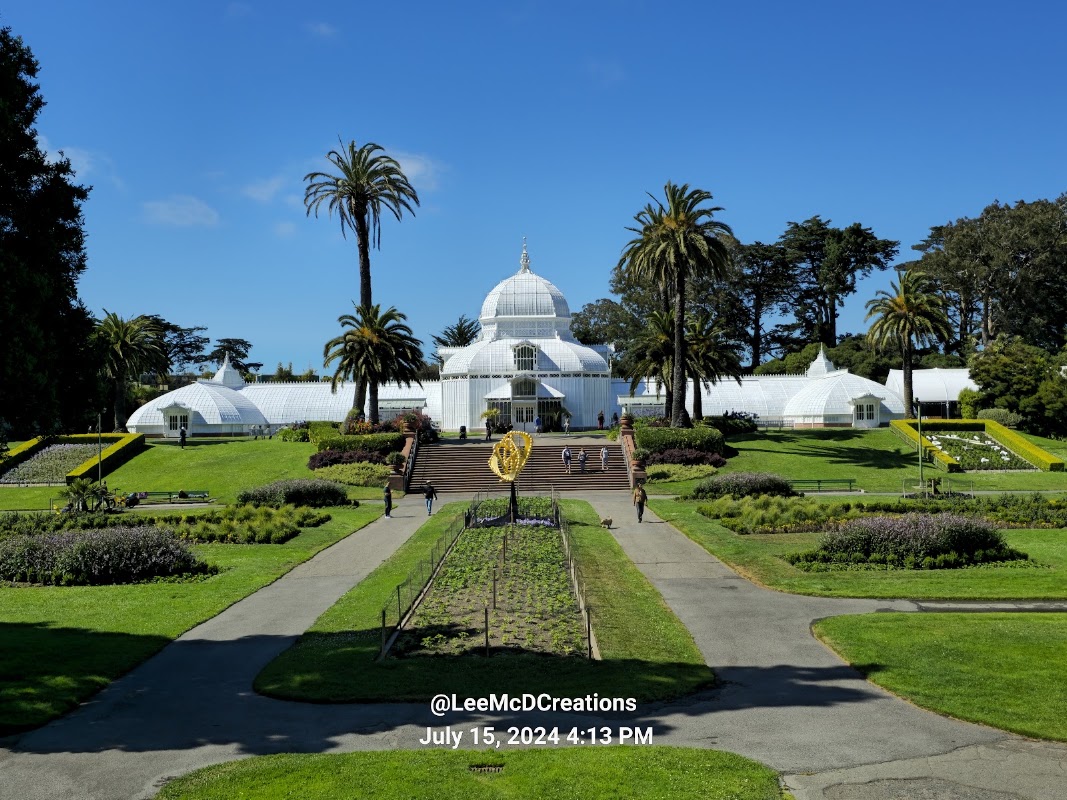
At the eastern end of the park, the Conservatory of Flowers is a white wood-and-glass Victorian greenhouse dating to the 1870s — the oldest of its kind in the country — and inside it is humid, warm and full of orchids, palms and a lily pond. When the rain arrives, this is the best hour in Golden Gate Park: you are technically still in the garden, you are entirely dry, and the light coming through the fogged glass on a grey day is lovely.
Conservatory of Flowers
Photo: Lee McDaniel (Lee McD)
Eat & rest
The park is bordered by two of the city's better eating streets, and both are made for a cold-weather lunch. Irving Street in the Inner Sunset, just south of the park, is a walkable run of ramen, dumplings, bakeries and coffee. Clement Street in the Inner Richmond, just north, is the city's other Chinatown in everything but name — dim sum, noodle houses, tea shops and a well-loved independent bookshop. Either is a ten-minute walk or a five-minute ride from the garden gates, and neither wants a reservation.
Day 2
The bridge on a clear day, then North Beach after dark
A note from Wonder
The Palace of Fine Arts to Fort Point is a flat two-mile walk with no shelter — check the forecast and the wind before committing, and bring a windproof layer regardless of the temperature. North Beach is a fifteen-minute ride east from the Marina. If you want the cable car, ride it in the evening from the Powell Street end and accept the queue as part of the experience.
Anchor
Palace of Fine Arts
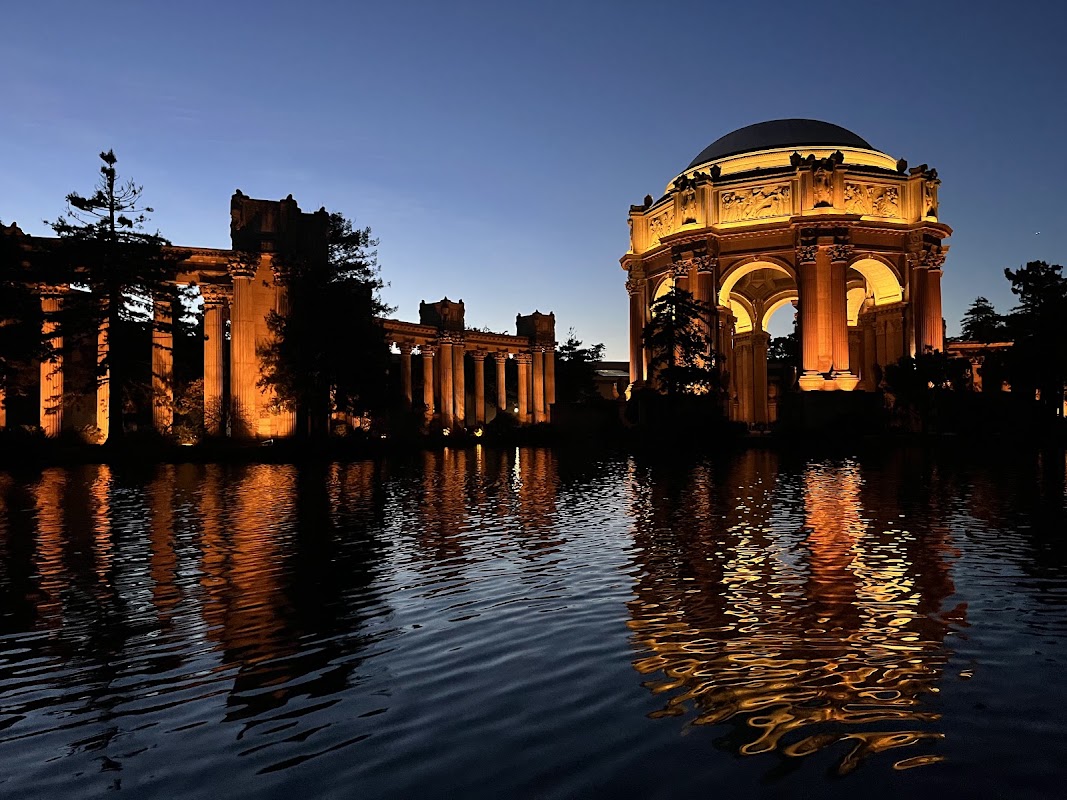
The Palace of Fine Arts is the last survivor of the 1915 Panama-Pacific International Exposition: a vast Beaux-Arts rotunda and colonnade reflected in a lagoon full of swans and ducks, sitting incongruously in a residential corner of the Marina. It takes twenty minutes to walk around, it costs nothing, and it is the most photographed romantic backdrop in the city for good reason.
From there, walk west along the waterfront through Crissy Field — a former airfield turned shoreline park, with the bridge growing in front of you the whole way — to Fort Point, the brick Civil War-era fortification tucked directly underneath the southern anchorage of the Golden Gate Bridge. Standing beneath the span with the surf hitting the seawall is the best free thing in San Francisco, and February gives you the clearest air of the year to do it in. The whole walk is flat and paved, about two miles end to end, and you can turn back at any point.
Palace of Fine Arts
Photo: Liung “SunnyCalifornia” Ling
Backup
Ferry Building Marketplace
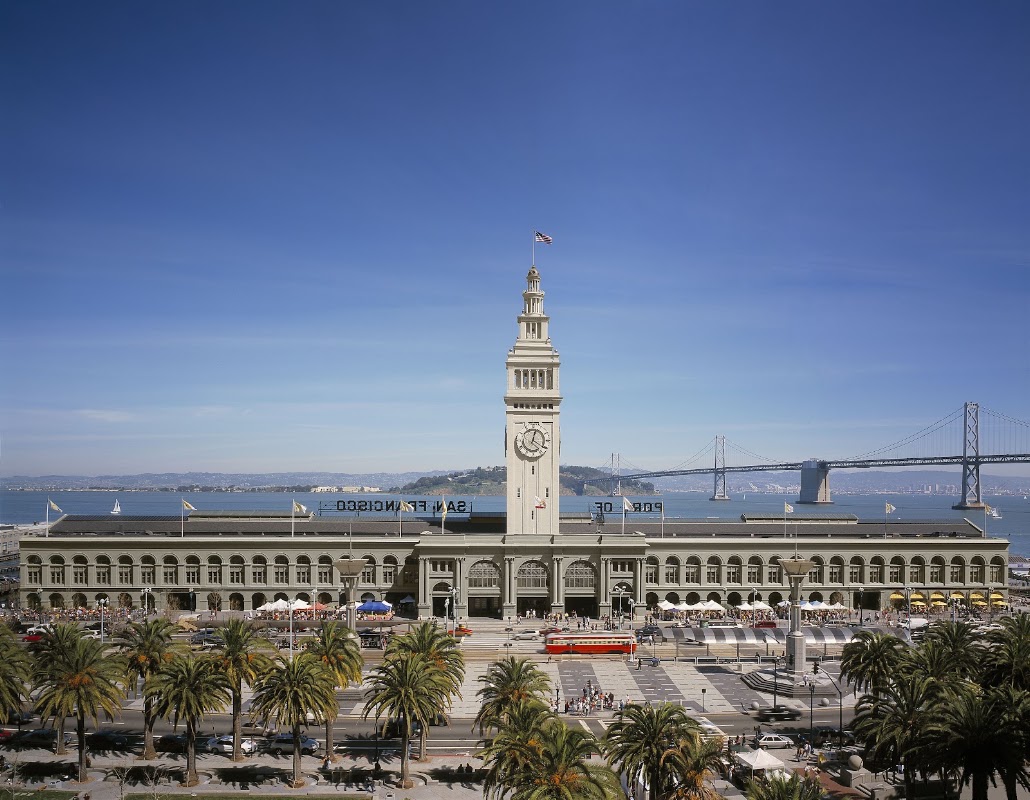
If the front has come through and the waterfront is a wind tunnel, go east instead. The Ferry Building on the Embarcadero — the 1898 terminal under the clock tower — is a long, high, entirely indoor hall of food stalls, bakeries, oyster bars, cheesemongers and coffee, with the bay on one side and the city on the other. On Saturday mornings the farmers market wraps around the outside of the building under awnings. It is a warm, delicious hour, and the historic F-line streetcars run right past the door.
Ferry Building Marketplace
Photo: Ferry Building
Eat & rest
End the day in North Beach, which is the most walkable dinner-and-a-drink neighbourhood in the city and barely needs a plan. City Lights Booksellers, the Beat-era bookshop opened in 1953, stays open late and has a poetry room upstairs; Vesuvio Cafe next door has been a bar since 1948 and is exactly as it sounds; Caffe Trieste a few blocks up has been pulling espresso since 1956 and is where the neighbourhood actually sits. Molinari Delicatessen, in business since 1896, will build you a sandwich the size of a forearm if you would rather picnic than dine.
For the classic cold-evening ritual, walk down to the Buena Vista Cafe at the end of the Hyde Street cable car line, which has been serving Irish coffee since 1952 and makes it in a long assembly line behind the bar. It is touristy, it is crowded, and it is genuinely one of the best twenty minutes in the city on a February night.
Day 3
The Mission, murals, and a hilltop sunset
A note from Wonder
The Mission is flat and easily walked; the hills for sunset need a short ride. February evenings cool off fast once the sun drops even when the afternoon was warm, so carry the extra layer you resented all day. Both restaurants named above book out for Valentine's weekend — treat them as the one thing you reserve before you book anything else.
Anchor
Mission Dolores Park
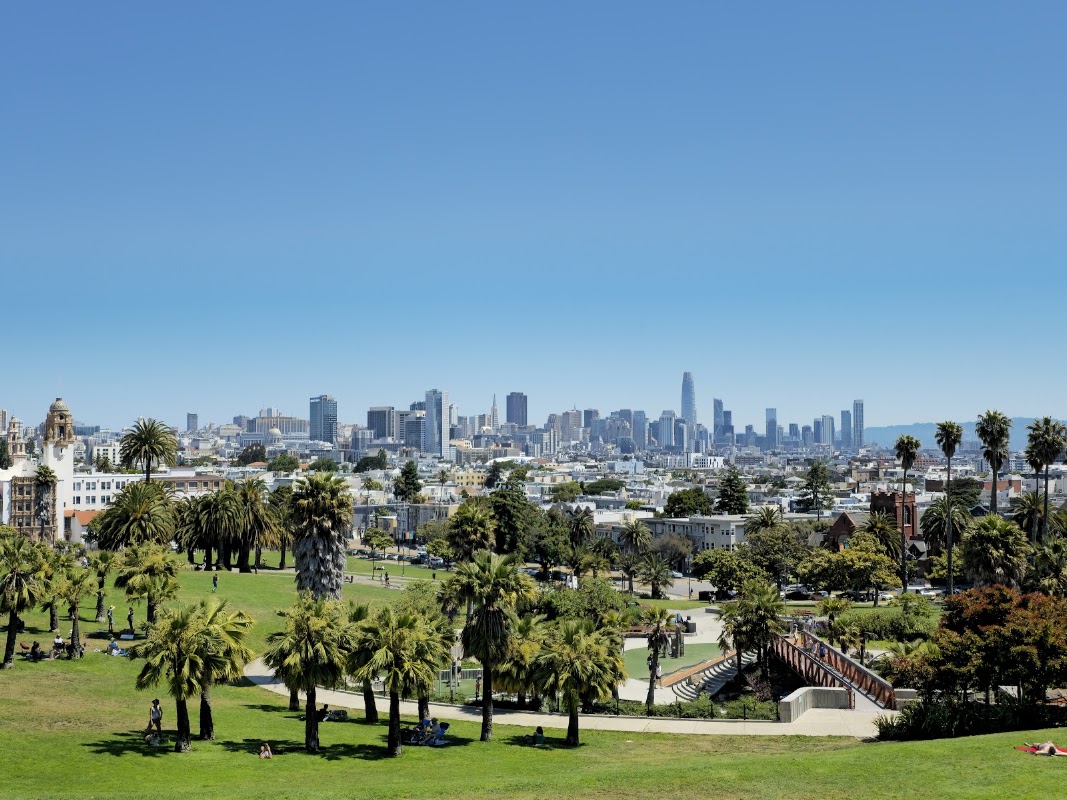
The Mission gets the best weather in San Francisco — it sits in the city's sunniest, most sheltered pocket, which matters more in February than in any other month. Start at Mission Dolores Park, on the slope with the whole downtown skyline laid out in front of you, then walk two blocks to Mission Dolores itself: the adobe chapel completed in 1791, the oldest intact building in San Francisco, with a small cemetery garden behind it.
Then go looking for murals, which is the thing to do here. Balmy Alley, off 24th Street, has been continuously painted since the 1970s and is the densest concentration of political and community mural art in the city; Clarion Alley, between Mission and Valencia, is its scrappier, faster-changing sibling. Both are a block long and free, both change constantly, and walking them takes an hour if you stop to actually read them. In between, 24th Street and Valencia Street are the two spines of the neighbourhood — bakeries, taquerias, bookshops and bars, all of it walkable.
Mission Dolores Park
Photo: RW
Backup
Legion of Honor
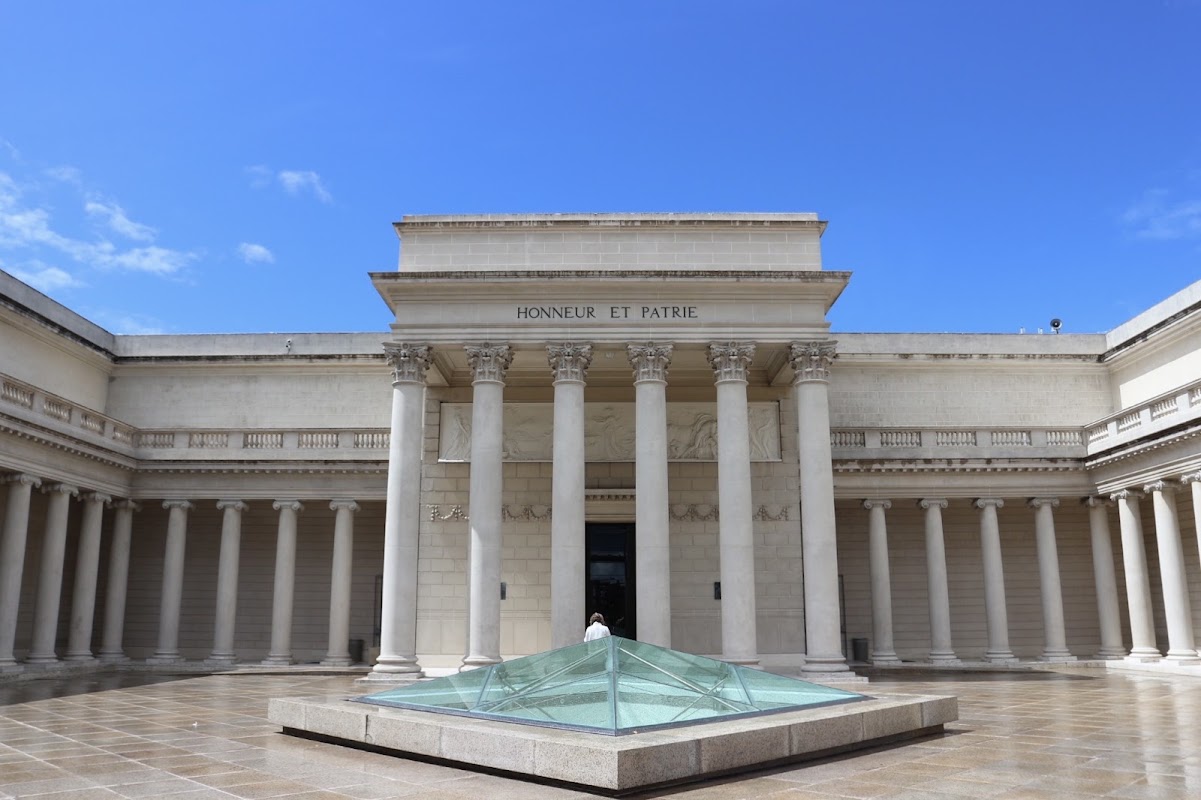
If the last day is a washout, spend it at the Legion of Honor, the neoclassical museum opened in the 1920s on the bluff at Lincoln Park, at the far north-west corner of the city. It holds European painting and sculpture, including a cast of Rodin's Thinker in the courtyard, and its windows and terrace look out over the Pacific and the bridge. Museum indoors, dramatic ocean weather outside the glass — an ideal rainy-day pairing, and one of the most beautifully sited buildings in California.
Legion of Honor
Photo: hyeonju
Eat & rest
Sunset moment: mid-February sunset is around a quarter to six, and the best seats are on a hill. Bernal Heights Park, a short ride south of the Mission, is a bare grassy summit with a 360-degree view and far fewer people than Twin Peaks; Corona Heights, at the top of the Castro, is closer and almost as good. Take something to sit on — the grass is often damp this time of year.
For the last dinner, Foreign Cinema on Mission Street projects films onto the wall of its heated outdoor courtyard while you eat, which is as close to a purpose-built Valentine's restaurant as the city has; book it well ahead. Zuni Café, a short ride north on Market Street, has been a San Francisco institution since 1979 and is the other right answer. If you would rather stay casual, the taquerias of the Mission are the city's most-argued-about food and none of them take reservations.
When the rain comes through (indoor anchors)
February is the middle of the wet season here — expect at least one half-day of real rain and plan a swap for it rather than being surprised:
Conservatory of Flowers (Golden Gate Park) — a Victorian glasshouse from the 1870s, warm and humid, with orchids and a lily pond.
de Young Museum (Golden Gate Park) — American art and global collections, and the free glass-walled Hamon Observation Tower on top with a 360-degree view over the park and the city.
Legion of Honor (Lincoln Park) — European art on a clifftop, with Rodin's Thinker in the courtyard and the Pacific out of the windows.
SFMOMA (SoMa) — one of the largest modern art museums in the country; several hours if you want them, and a good café.
Ferry Building Marketplace (Embarcadero) — an indoor food hall in the 1898 terminal; oysters, bread, cheese and coffee with the bay outside.
Grace Cathedral (Nob Hill) — a huge Gothic-revival cathedral with gilded bronze doors and two labyrinths, one indoors, that anyone may walk.
Top of the Mark (Nob Hill) — a bar on the nineteenth floor of a 1920s hotel, open since 1939, with windows on all sides; the best way to see the city in the rain.
Where to eat and drink
Purpose-built romantic dinner: Foreign Cinema (Mission Street) — films projected on the courtyard wall, heaters overhead; book weeks ahead for February.
The San Francisco institution: Zuni Café (Market Street) — open since 1979, with a wood-fired chicken that people plan trips around; book ahead.
Irish coffee ritual: the Buena Vista Cafe (Hyde and Beach) — pouring since 1952, at the end of the cable car line; crowded and worth it.
North Beach evening: Vesuvio Cafe and City Lights Booksellers (Columbus Avenue) — a 1948 bar and a 1953 bookshop, side by side, both open late.
Espresso and sandwiches: Caffe Trieste (since 1956) and Molinari Delicatessen (since 1896), both in North Beach — the old Italian neighbourhood, still working.
Lunch streets by the park: Irving Street in the Inner Sunset and Clement Street in the Inner Richmond — dim sum, noodles, bakeries, no reservations.
A note on getting around: distances are short but the hills are not a joke. Rideshares and the historic F-line streetcars fill the gaps between the neighbourhoods in this plan.
Make this San Francisco plan yours
Tell WonderKit your dates and who's coming, and we'll rebuild this around your group in about a minute — everyone votes on the plan, and costs split automatically. One subscription, the whole group.